In conversation with Ben Pentreath
Interviews | 21.10.2026
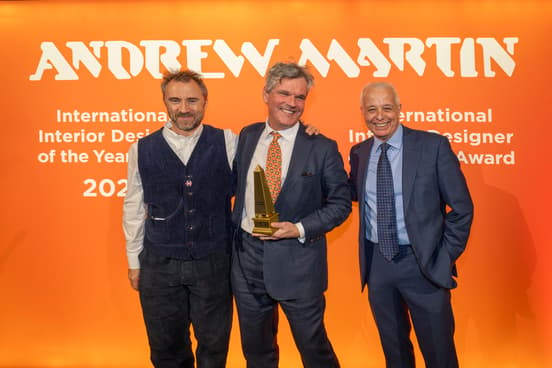
Fresh from winning Andrew Martin's 30th International Interior Designer of the Year Award, we sat down with Ben Pentreath to discuss inspiration, personality in interiors, and the enduring appeal of creating homes that feel lived in and loved.
Q. Congratulations on winning the Andrew Martin Interior Designer of the Year Award. What did that recognition mean to you personally?
A. "It was a real honour, but also huge surprise! I had always been aware of the awards but I somehow felt it was for designers who were, how can I put it, rather more international - and rather more 'designed' - than me!"
Q. Your interiors feel both deeply English and wonderfully eclectic. Looking back, what has shaped your design eye the most?
A. "Gosh, there's no specific thing, but I think like a lot of us there's a whole period where you are absorbing and processing a million influences and ideas. I think in the age of Instagram and Pinterest, with an extreme over-saturation of images, it's harder and harder to think about what all this means - what you really like, and why. I think a lot of my real inspiration came from a moment about 15 or 20 years ago when I started buying a lot of second-hand decoration and design books from the 50s, 60s and 70s. I realised that much of what I was looking at still felt fresh and timeless. And that was what I have been aiming for ever since."
Q. Many designers can create a beautiful room, but not all create spaces with character. What do you think gives a home genuine personality and soul?
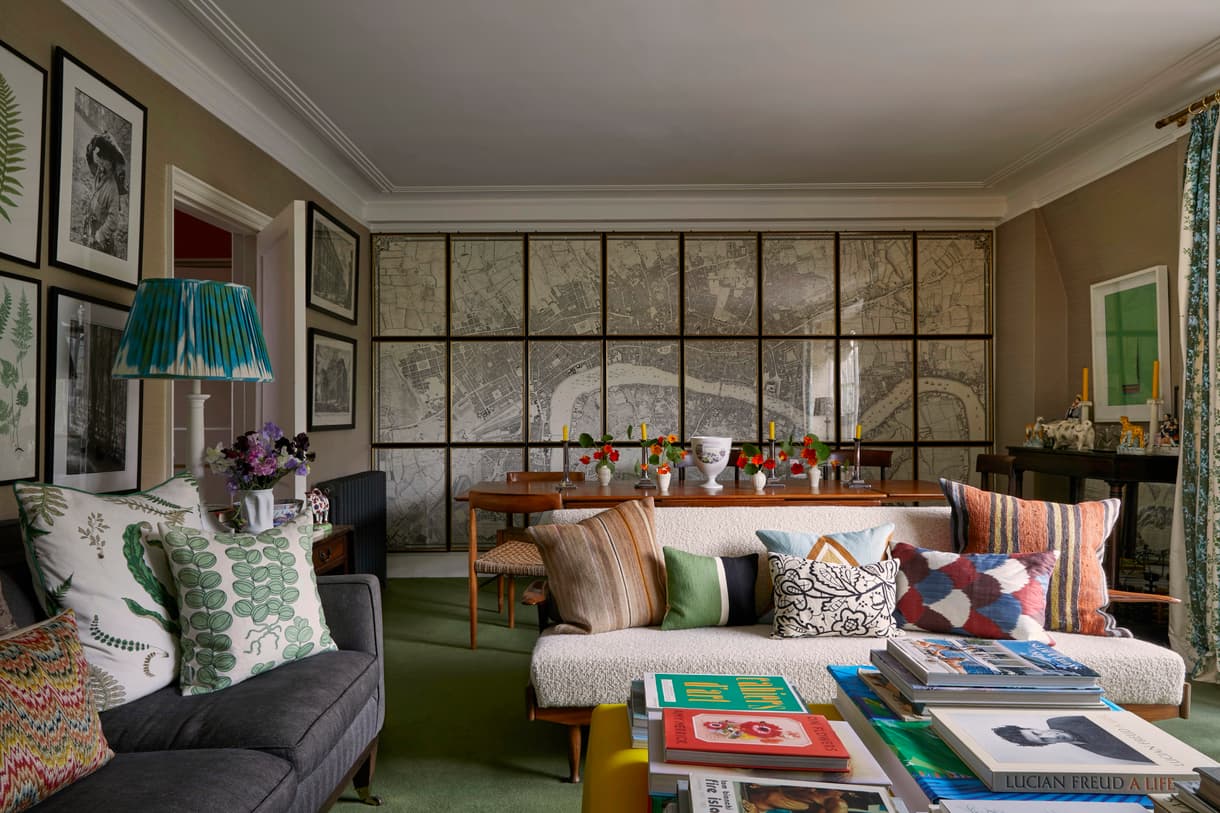
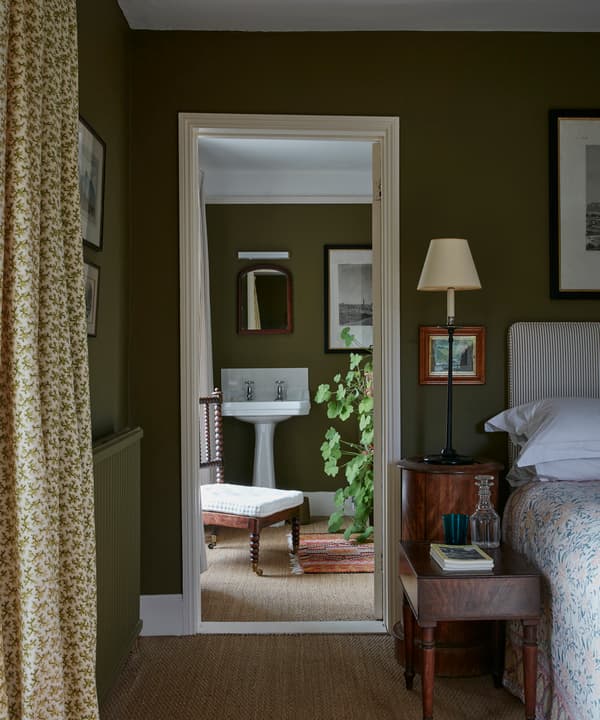
A. "Well, quite clearly, it's the people who will live there, although they do have to play their part in the equation. The simple ingredients are the things that I find it, actually, hardest to buy for any client. The first is old rugs. I know that sounds odd, but a home without an old carpet lacks soul, to me - even rooms which have lots of nice antique furniture lack soul if all the rugs are brand new. And I find it very hard to buy old rugs for clients without them being involved, because whatever their qualities, they are a bit like pictures or works of art - they either respond to you, or they don't. The second is, in fact, pictures. I mean, real pictures, not just decorative wall fillers. Those are easy enough to buy as a decorator to hang in a spare bedroom or hallway. But the paintings that the owners want to live with, and which have meaning to them and their lives - that's not something that it's easy to curate quickly, without it feeling false. And the third ingredient is books - books which really get read, rather than just look nice on shelves but haven't been touched since the minute they came out of the shrinkwrap."
Q. If someone walked through your home, which objects would tell them the most about who you are, and why?
A. "Well, Charlie and I have a lot of objects. I think the ones that would tell you most about us are found in our library, filled with my collection of Staffordshire, all our books, and lots of Charlie's crazy collections including his latest obsession: buying miniature Orkney chairs."
Q. You've travelled extensively throughout your career. What's one place that changed the way you see interiors, and what did it teach you?
A. "Oh my goodness, so many places and so many things to think of. I don't think I can limit it to one. Most of the places that are most inspirational are very close to home - many of which are just friends' houses. When I wrote my first book on English Decoration, (which I'm glad to say is still in print 14 years after it was first published…) I visited a lot of these and took photographs with Jan Baldwin - in a sense that first book, and English Houses that followed, are love letters to that simple process of absorption rather than an electric, life-changing moment."
"Of places that have changed the way I think, Stockholm is perhaps quite high on the list, or the Luis Barragán House in Mexico City."
Q. You've designed everything from private homes to places like Poundbury. Has designing whole communities changed the way you think about creating a sense of home?
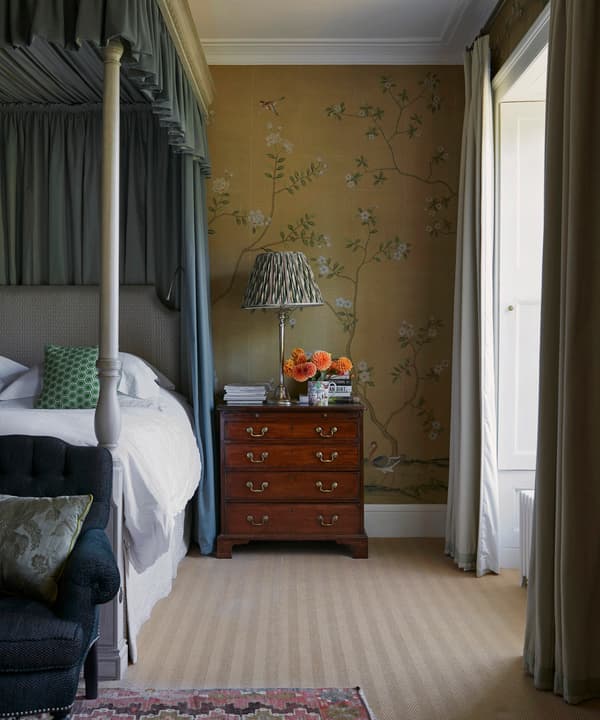
A. Yes, it does, inevitably. You're working at different scales but the things that are important are strangely all connected - scale, balance, harmony, interest, a moment here and there of intrigue. I write a bit about this in my last book, An English Vision, which looks at all our work from large scale to the most humble, simplest room.
Q. You once said that staying inspired comes from keeping your eyes and mind open. What's inspired you recently?
A. "I couldn't agree more with myself! Very recently…two days ago in fact, I visited the unbelievably beautiful Cranbrook Schools in the suburbs of Detroit, designed by Eliel Saarinen, who is a rather recent discovery. It was wonderful to see. I'll also add that I loved Detroit, which I was visiting for the first time. What a great city!"
Q. What is it about a room that makes you want to stay rather than simply admire it?
A. "What a good question. There are so many rooms you are happy to see but don't really want to spend time in… quite a lot of them in grand houses which are open to the public. A room to stay in needs to have that magical ingredient of soul that we talked about earlier. And really, it needs to have your friends in it, too."
Q. What's the best piece of advice you've been given, or the advice that you'd give to upcoming designers?
A. "Well, I've been asked that question over the years as you can imagine, and my advice has always been to do whatever you can to open a shop. Even if it's a tiny shop window. That's in a way what I did, although my shop, which I share with my friend Bridie Hall, is a bit different, because Bridie is really the creative driver of the place and I can't spend so much time on it as I used to. But in the early days it was really what put my name on the map. It led me to being asked to write my first book, and that also was an important part of developing a career. But ultimately, I think it's about understanding and staying true to your values, working incredibly hard, and remembering that it is all about collaborating with your clients rather than dictating to them - even if that means that my work over the last 20 years has been a lot crazier and more eclectic than I'd ever have expected."
Ben's projects are featured in the Interior Design Review, Vol 30.