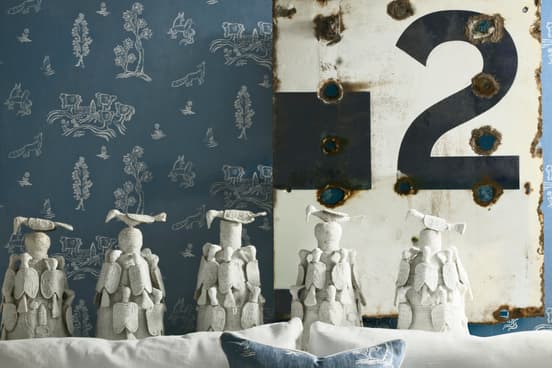
On the Sofa with...Russell Jones
Interviews | 19.08.2026
This month, we're On the Sofa with...Russell Jones, Design Director of interior design studio Laughland Jones, renowned for their luxury ski chalet interiors.


Q. What's usually your starting point when designing a room: the architecture, the client, or the atmosphere you want to create?
A. "Our starting point is always with the client - the initial first step for us is to gain an understanding of our clients, their lifestyle, hobbies, likes and dislikes etc. Every project we undertake is bespoke and tailored to the client, following this we take the clients brief and ensure it works seamlessly with the architecture and geography of the property."
Q. Is there a material or finish you're particularly drawn to at the moment?
A. "Natural materials. We live in a world of synthetics, and so it's important that our projects balance this with the use of natural materials, local to the region we are working in. Natural stones and textured timbers form a large part of our projects and help ground them to the location. Practicality for our clients is also a major proponent to the designs - form without function is great in the really short term, but quite irritating in the long term, and so use of natural materials is considered - what material and where it is located to ensure form and function are in equal measures throughout."
Q. Which influences outside of interiors are inspiring you right now?
A. "I have two young girls, 4 and 7 years old, and they are helping me to understand the reality of a 'family home' and all of the requirements to ensure the chaos can equally be matched with wellbeing and stress-free living (or as stress-free as possible)…"
Q. If you could take on one dream project anywhere in the world, what would it be?
A, "It would have to be something unusual and unrestricted by any design barriers. I like monolithic structures, concrete, stone etc - a contemporary home that makes the most of the location - positioned on the top of a mountain with views to die for - glazing that ensures the surroundings become the artwork. The internal walls are quiet, the furniture is subdued, and the landscape is vibrant."
Q. What's the most unusual client request you've ever managed to make a reality?
A. "A project involving an internal circular slide that took the guests from the entrance hall on a journey down 4 floors in-between the staircase and landing them in a games room…"
Q. Which room do you enjoy designing the most, and which one secretly causes the biggest headache?
A. "This is completely project and client dependant. I wouldn't say there is any one room I enjoy designing the most, and I wouldn't say there is any one room that causes the biggest headache… we like to push boundaries, and so I guess we have the ability to make any room a headache depending on what we design, but that's actually the fun part too - creating a challenge, solving it, and realising your vision."
Process & Practice
Q. When working on a period property, how do you decide what to preserve and what to reinvent?
A. "Period properties are wonderful to work on, the aim being to design an interior that harmonises with the period features. You retain as much as possible, highlighting key elements with lighting, ensuring that any materials selected, and any furniture designed is complimentary to the period. If it's designed well, the period elements will be even more impressive at the end than at the beginning."
Q. Do you guide clients towards bolder design decisions when they're hesitant to take risks?
A. "This is an ongoing challenge with all designers, and with the availability of AI to assist with design, we have the ability to create quick visuals (not always 100% accurate) to give the clients an idea of how the interior may look before its dismissed. We are there to push the boundaries and ensure the interior is tailored to the clients. Some clients may simply not enjoy bold design and colour, which is absolutely fine - it's their home - we work with that and create a beautiful interior regardless, perhaps with a smidge of bold joinery detailing, floor detailing etc rather than 'bold design'."
Q. What do you value most in the suppliers and makers you work with?
A."Their expertise. We are experts in our field, but not in the manufacturing processes that our artisans specialise in. Working with trusted suppliers and makers enables us to ensure we get the best products, the best quality and elements that are fit for purpose - our network of suppliers ensures that we are able to do this."
Q. Looking back at a completed project, what tells you it has been a success?
A. "The clients - their reaction, and the fact that 80% of our projects are via repeat clients or recommendations from past clients."
"Our starting point for any project is the client - their lifestyle, hobbies, likes and dislikes. We take the client's brief and ensure it works seamlessly with the architecture and geography of the property."
- Russell Jones

Relationship with Andrew Martin
Q. What first drew you to Andrew Martin as a resource for your projects?
A. "Andrew Martin has always offered a great array of furnishings, lighting, accessories, fabrics and wallpapers. We can always rely on good quality, good value, and a big variety of designs from bold to subdued, colourful and neutral. It's a reliable source for our designers and almost all of our projects utilise some Andrew Martin elements."
Q. Is there an Andrew Martin fabric, wallpaper or piece of furniture you've specified time and again?
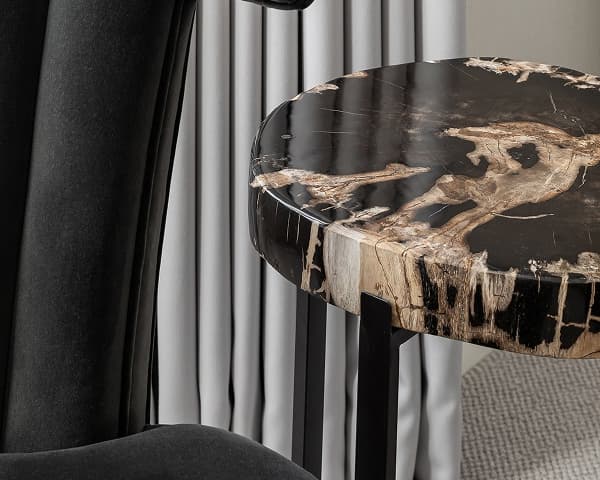
A. "The petrified sliced side tables - we use them in many of our chalet projects. Each one is unique, and they harmonise so well with the alpine setting and architecture of the projects."
Q. How do you use statement pieces without overwhelming a scheme?
A. "Statement pieces are used to create a second or third focal point. Importantly there shouldn't be too many of them, or it can be a bit 'sensory overload'. We like to create homes that have elements of fun, amusement and joy to the interior schemes, personality of our clients should shine through, and they should be calm and pleasant environments to be in. Statement pieces should become a 'wow' in a space, and ideally relate back to the client in some way - so that they can become a talking piece for them."
Q. Which Andrew Martin design has surprised you most once installed in a client's home?
A. "We utilised the Truman corner sofa recently. I was surprised by the immense comfort, the weight of the piece and the general quality (in a good way just to clarify)."
Travel & Lifestyle
Q. Is there a destination whose architecture or interiors continually inspire your work?
A. "Japanese architecture and interiors I always find fascinating. I enjoy the way they make the most of natural light, and creating strong contrast with dark timbers, allowing the walls to be bathed in shadow created by the internal architecture. The materials are always carefully considered, and the way people live in them is thought through. Good Japanese interiors are well crafted, well considered and generally quite striking."
Q. What's the most memorable hotel you've stayed in from a design perspective?
A. "I have stayed in a couple of the Firmdale hotels in London which are always good fun - the use of fabric pairings and bespoke embroidery is very clever - Kit Kemp is a constant inspiration for us in the studio. The unique artworks are always impressive too. I have also stayed in the Hamilton Princess in Bermuda, and that it truly jaw dropping - purely because of the curated art collection in the entrance/communal spaces that everyone can view - up close - and the artists are well known…"
Q. Are there particular places, landscapes or cities that influence your colour palettes?
A. "Our projects are very much inspired by the location that they sit within, the views from the windows, the skyline etc. SO yes, we are influenced by many locations and landscapes - London, Oxfordshire, Canadian mountains, French and Swiss Alps, Provence, Cote d'Azur etc."
Q. What do you tend to bring back from your travels-objects, ideas, materials or something else entirely?
A. "Many photographs of interesting architectural detailing, interior styling ideas, interesting shapes - I try to capture as much as possible so that I can infiltrate the studio with fresh inspiration and ideas for the next project."
Q. If you could spend a month studying design anywhere in the world, where would it be?
A. "Japan!"
Q. What makes a room feel truly lived in?
A. "The clients - their own photos, noises, the height chart that they use to show the children growing, the coffee being put on in the morning, the artwork that is personal to them, the fact that the cushions aren't perfectly positioned and plumped, the scuff on the floor from a new years eve party…. We more often than not are invited back to our clients homes 1, 2 or 3 years later to discuss another project, and it is then that we can see how our interiors have worked. When we hand them over they look perfect, but when we get to see them years later, they look exactly the same but completely different - they belong to the clients, they have lived in them and truly made them even more perfect!"